Open Book and Pen Line Art: Design & Use
In the crowded landscape of digital assets, simplicity often commands the most attention. The Open Book and Pen Line Art motif stands as a timeless representation of knowledge, creativity, and the quiet discipline of learning. It is not merely an illustration; it is a visual shorthand for education, authorship, and intellectual growth. Whether you are a graphic designer looking for a clean vector asset, an educator seeking classroom decor, or a small business owner branding a tutoring service, this minimalist aesthetic offers versatility that few other symbols can match.
The power of this design lies in its reductionist approach. By stripping away color, texture, and complex shading, the focus shifts entirely to the form and the story the lines tell. An open book suggests accessibility and opportunity, while the pen implies action, creation, and the personal touch required to fill those pages. Together, they create a narrative of potential waiting to be realized. This makes the artwork particularly effective for audiences ranging from students and librarians to writers and lifelong learners.
The Aesthetic Power of Minimalist Line Work
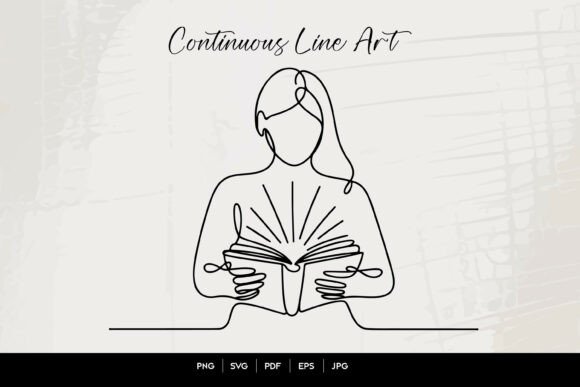
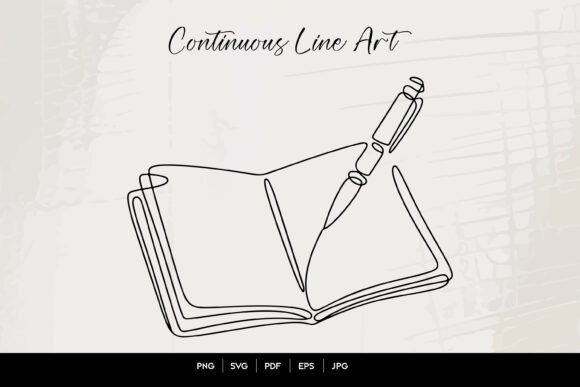
Minimalism in design is about removing the non-essential to reveal the core message. When applied to the concept of reading and writing, line art achieves a clarity that photographs or detailed illustrations often miss. The continuous line technique, where a single unbroken stroke defines the entire image, adds a sense of fluidity and connection between the tools of thought—the book and the instrument of expression.
This style resonates deeply with modern design trends, particularly within the boho and monochrome aesthetics popular in home offices and creative studios. The absence of heavy colors allows the artwork to blend seamlessly into various environments without clashing with existing decor. For designers, this means the asset is incredibly adaptable. It can serve as a standalone piece of wall art, a subtle background element for a website, or a bold icon for a mobile application.
The elegance of the outline style also ensures longevity. While colorful trends may fade, the classic black-and-white contour remains relevant. It speaks to a universal appreciation for the written word that transcends cultural and generational boundaries. For entrepreneurs building brands around education or content creation, using this imagery signals professionalism, clarity, and a dedication to substance over flashiness.
Practical Applications Across Industries
The utility of Open Book and Pen Line Art extends far beyond simple decoration. Its semantic value makes it a powerful tool for communication across diverse sectors. Here is how different professionals can leverage this specific visual theme:
- Educators and Schools: In classrooms, libraries, and study halls, this imagery reinforces the culture of learning. Printed on posters or used in lesson plans, it creates a focused atmosphere. The simple nature of the drawing ensures it does not distract but rather centers attention on the act of studying.
- Authors and Publishers: For writers, the pen and open book are their primary symbols. Using this line art on book covers, social media graphics, or author websites establishes an immediate connection with readers. It suggests a behind-the-scenes look at the creative process, inviting the audience into the writer's world.
- Coaches and Consultants: Professionals in the self-improvement, coaching, and consulting fields often deal with "writing your own story" or "opening new chapters." This visual metaphor aligns perfectly with their messaging, offering a sophisticated alternative to generic clip art.
- Stationery and Product Designers: Brands selling notebooks, journals, pens, or educational toys can use this artwork on packaging and product labels. The minimalist style complements physical products well, adding a touch of modern sophistication to everyday items.
Adapting Formats for Different Platforms
One of the greatest advantages of acquiring this art in multiple formats—such as PNG, SVG, EPS, PDF, and JPG—is the ability to adapt it for any medium. Each file type serves a distinct purpose in a professional workflow.
For web designers and digital marketers, the PNG format with a transparent background is essential. It allows the line art to sit cleanly over colored backgrounds, making it perfect for blog headers, email signatures, and social media posts. The high resolution ensures that even when scaled up for large banners, the lines remain crisp and do not pixelate.
Print professionals will find the SVG and EPS vector files indispensable. Because these formats are resolution-independent, the artwork can be enlarged to billboard size or reduced to a tiny favicon without losing quality. This scalability is crucial for branding consistency, ensuring that the logo or icon looks identical on a business card and a storefront sign.
The PDF version is ideal for direct printing, whether for DIY home decor projects or sending files to a commercial printer for high-quality posters. Meanwhile, the JPG format works well for quick sharing on platforms that compress images, such as Instagram stories or WhatsApp status updates, maintaining compatibility across all devices.
Creative Interpretations and Stylistic Variations
While the core concept remains the same, the execution of Open Book and Pen Line Art can vary significantly to suit different moods and contexts. Understanding these variations helps creators select the right asset for their specific needs.
The Continuous Line Approach: This style involves drawing the entire image with one unbroken stroke. It feels organic and human, mimicking the flow of handwriting. This variation is excellent for brands that want to appear approachable, creative, and authentic. It softens the rigid structure of traditional geometry.
The Geometric Outline: Some interpretations use straighter lines and sharper angles to create a more structured, architectural feel. This approach works well for corporate training programs, academic institutions, or tech companies focusing on data literacy. It conveys precision and order.
The Abstract Contour: In this variation, the book and pen might be suggested rather than fully defined, leaving room for the viewer's imagination. This is highly effective for artistic portfolios, galleries, or abstract branding campaigns where ambiguity invites deeper engagement.
When integrating these styles into a project, consider the surrounding elements. If your brand uses bold typography, a delicate line art piece can provide necessary contrast. Conversely, if your design is sparse, a slightly thicker line weight might add the visual weight needed to anchor the composition.
Implementing Consistency in Your Brand Identity
For freelancers and small business owners, consistency is key to building recognition. Incorporating Open Book and Pen Line Art into your visual identity requires strategic planning. Do not simply paste the image wherever there is empty space. Instead, treat it as a foundational element of your brand language.
Start by defining the context. Is the book closed or open? Is the pen resting on the page or hovering above it? These small details change the narrative. An open book with a pen resting inside suggests readiness and ongoing work, while a pen poised above implies the moment of inspiration. Choose the variation that best aligns with your brand's current stage or message.
Maintain color consistency. Even though the source file is monochrome, you should apply your brand's color palette uniformly. If your brand uses navy blue and gold, ensure the line art reflects that combination across all materials. Avoid random color changes that dilute the visual impact.
Furthermore, consider the spacing and alignment. Line art relies heavily on negative space. Give the image room to breathe. Crowding it with text or other graphics can obscure the delicate details and reduce its effectiveness. When used as a watermark or background, lower the opacity to ensure readability of the foreground content.
Conclusion: A Tool for Visual Storytelling
The Open Book and Pen Line Art is more than just a downloadable graphic; it is a versatile tool for visual storytelling. Its ability to convey complex ideas about learning, creation, and knowledge through simple lines makes it invaluable for anyone involved in the dissemination of information. From the classroom to the boardroom, this minimalist aesthetic bridges the gap between function and beauty.
By understanding the nuances of file formats, stylistic variations, and practical applications, you can harness the full potential of this design. Whether you are creating a printable poster for your home office, designing a logo for a new educational startup, or illustrating a blog post about the joy of reading, this line art provides a solid, elegant foundation. It reminds us that sometimes, the most powerful messages are the ones told with the fewest words—and the simplest lines.